Full analysis and follow-ups
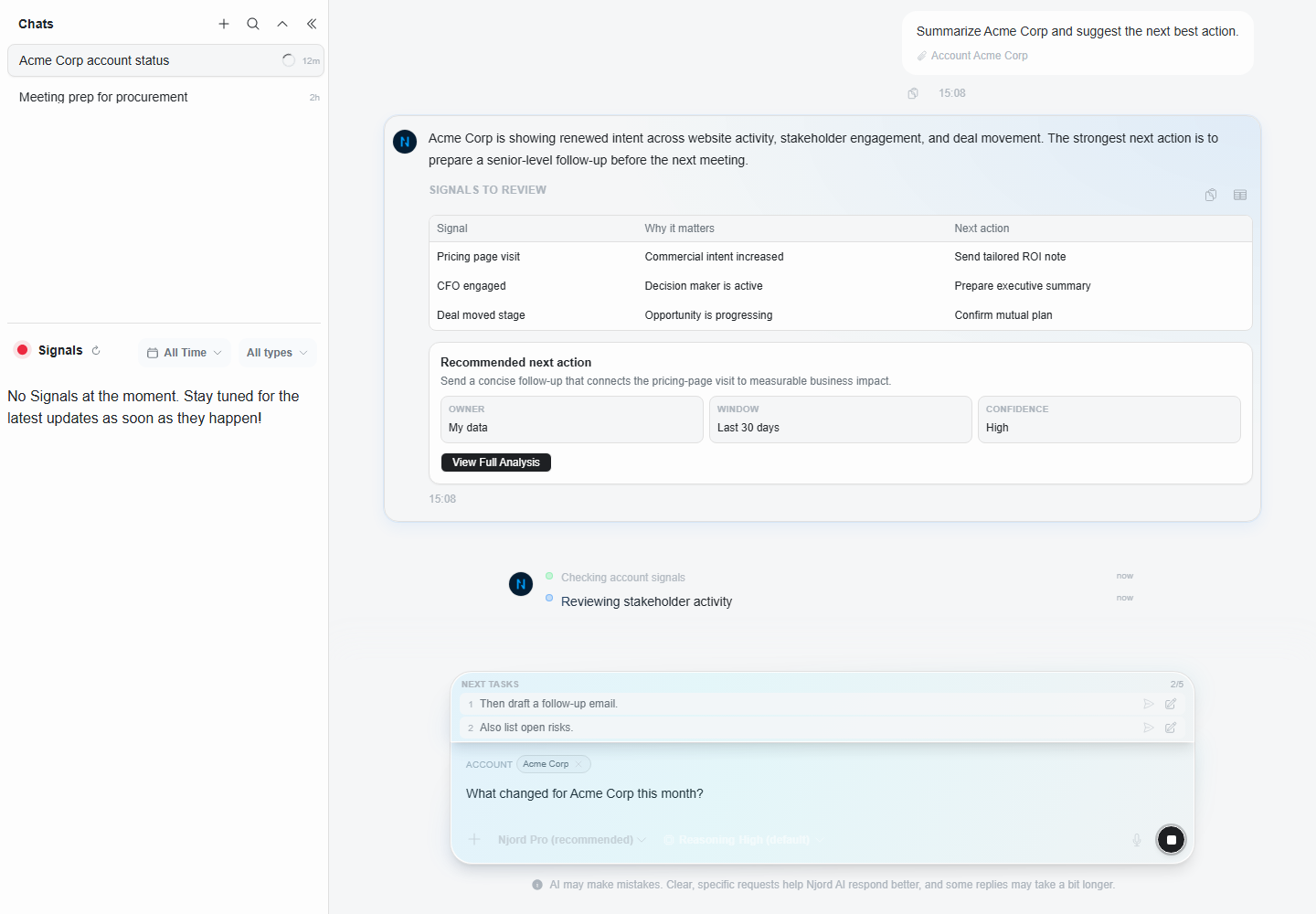
Full analysis and follow-ups
The first Njord AI answer is often a starting point. Use follow-ups to narrow, expand, reformat, or verify it. Use Full Analysis when you need the longer reasoning behind a response.
Image guide: this screenshot shows follow-up prompts queued behind an active answer. Queue related follow-ups only. For a different account or task, use a new chat.
When To Use A Follow-Up
Use a follow-up when the answer is close but needs work.
| Need | Follow-up |
|---|---|
| More evidence | "Show the evidence behind each recommendation." |
| Shorter summary | "Shorten this to five bullets." |
| Clear actions | "Turn this into actions with owner and timing." |
| Better format | "Put this in a table." |
| More detail | "Go deeper on the top two accounts." |
| Safer wording | "Remove internal assumptions and make this customer-safe." |
Follow-ups are better than starting a new chat when the subject stays the same.
When To Use Full Analysis
Use Full Analysis when you need to understand why Njord AI made a recommendation. It is most useful for:
- Account prioritization.
- Website Lead review.
- Leadership summaries.
- Complex signal patterns.
- Comparing several accounts.
- Explaining campaign movement.
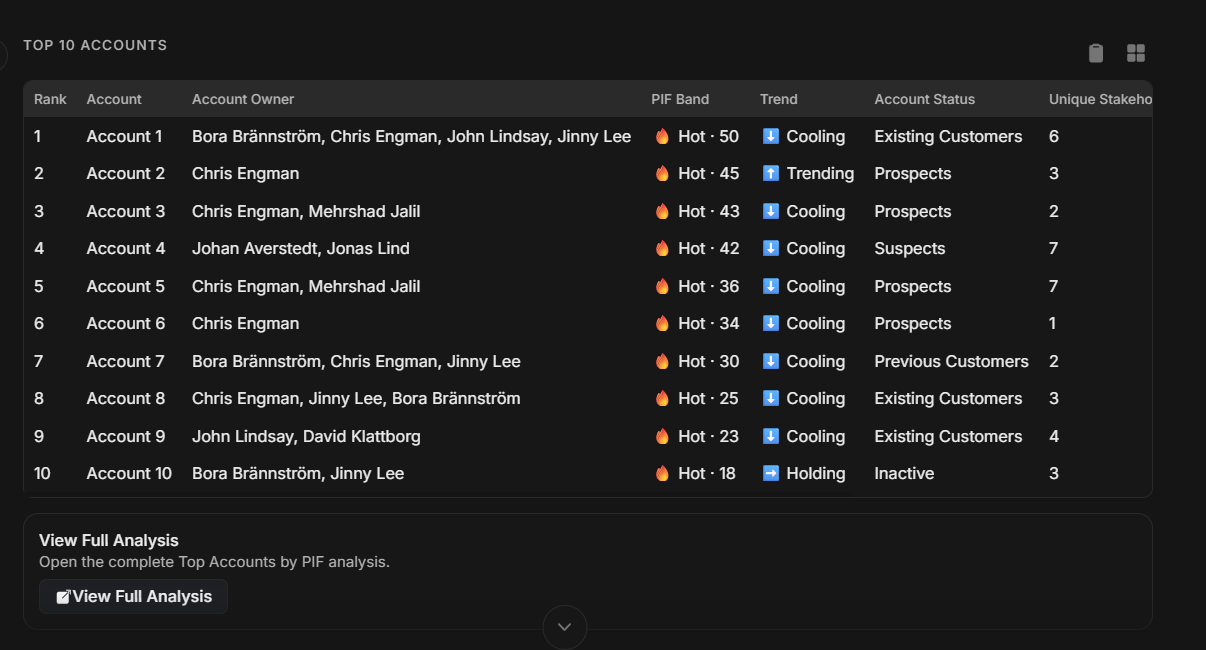
Image guide: the Full Analysis dialog gives more room for a longer answer. Use it when a short chat response is not enough to understand the reasoning.
What To Check In Full Analysis
Look for:
- Which records were used.
- Which time range was used.
- What facts support the recommendation.
- What is inferred from the facts.
- What is missing.
- Which next step is safest.
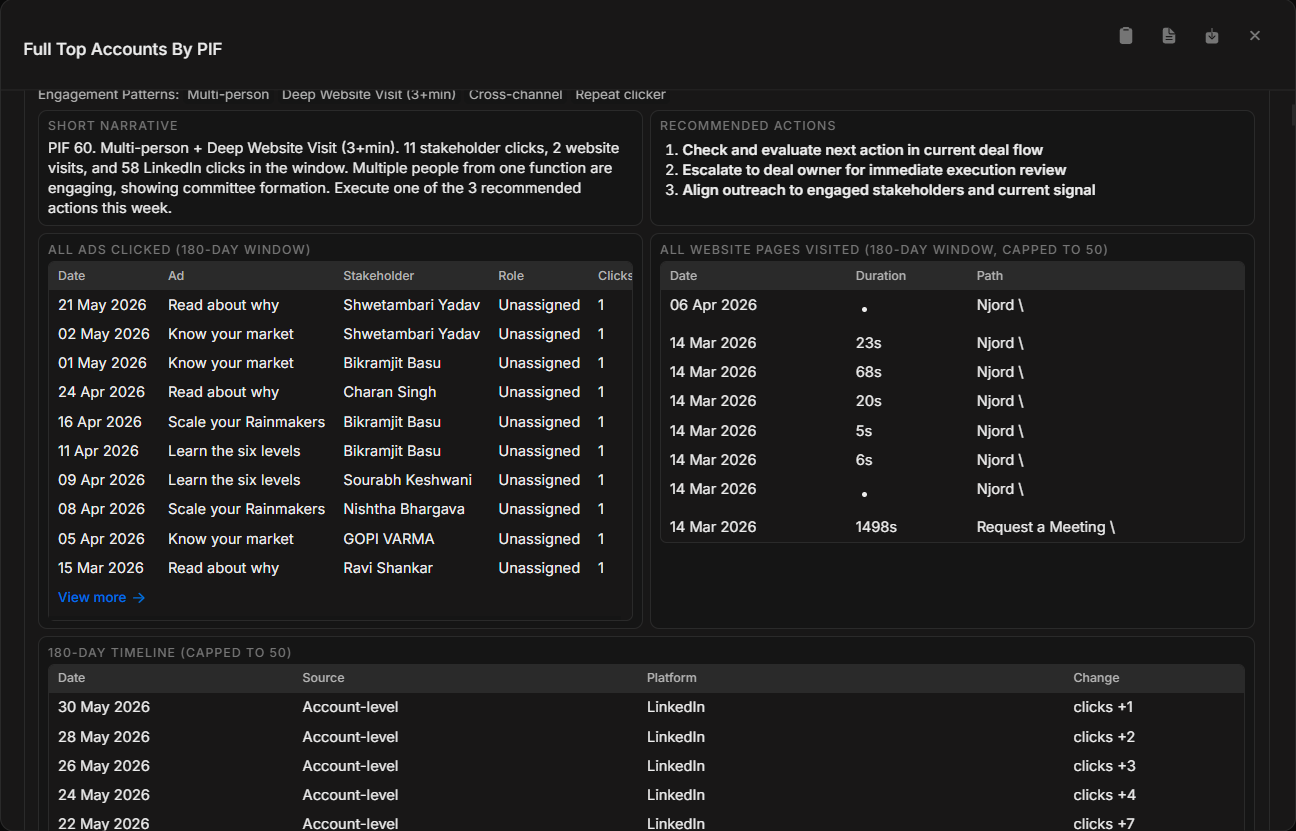
Image guide: this view shows a deeper answer with more explanation. Treat it as a working analysis, then verify important facts in the actual account, stakeholder, report, or website detail page.
Build A Better Answer In Stages
For complex work, use this sequence:
- Ask for the summary.
- Ask for the evidence.
- Ask for risks or missing data.
- Ask for next actions.
- Ask for the final format you need.
Example:
"Now turn this into a leadership-ready update with one headline, five bullets and three recommended actions."
When Not To Use Full Analysis
You do not need Full Analysis for simple rewrites, quick summaries, or obvious answers. For simple work, ask for a short answer directly and use follow-ups only if needed.